

Can a short visit really help your teenager decide whether a school feels right? A high school trial program in Phuket can offer more than a campus tour: it gives students a chance to experience a learning environment and teaching approach firsthand. Still, a trial is a fit check, not a promise that it will capture every part of everyday school life.
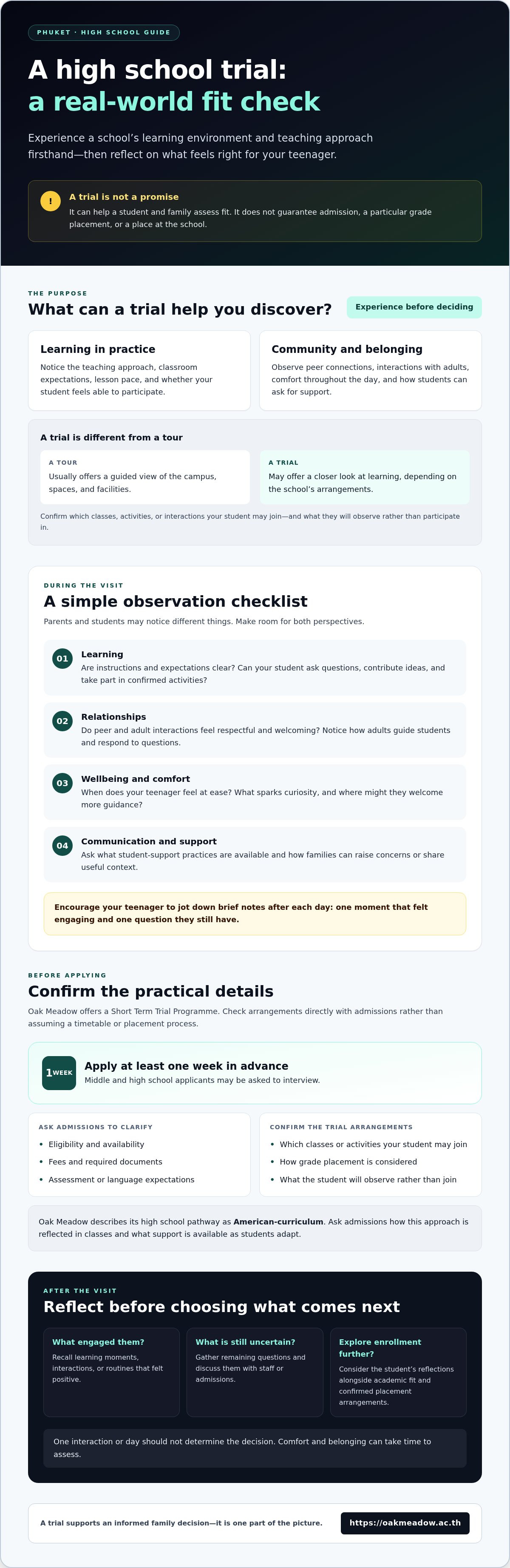
It’s natural to wonder what your child will do, whether they’ll join regular classes, and how the school will consider grade placement. Oak Meadow offers a Short Term Trial Programme, and families should apply at least one week in advance. Middle and high school applicants may be asked to interview. Confirm class participation and placement arrangements directly with admissions.
This guide explains what to observe during a trial, from classroom engagement and peer connections to your student’s comfort asking questions. It also covers practical details to check before applying, including availability, eligibility, documents, and next steps. With preparation and time to reflect, your family can decide whether to explore enrollment further.
Key Takeaways
- A high school trial can help your student assess a school’s learning environment and teaching approach, but it doesn’t guarantee admission or grade placement.
- Look beyond academics: notice how your student connects with peers, feels throughout the day, and responds to school routines.
- Invite your teenager to record their own impressions so their questions and comfort level inform the decision.
- Before applying, ask admissions to clarify eligibility, fees, required documents, and any assessment or language expectations.
- After the visit, discuss what felt engaging, what remains uncertain, and whether to explore enrollment further.
What can a high school trial program in Phuket help your family discover?
A high school trial gives a student a short-term opportunity to experience a school’s environment and teaching approach before the family considers a longer-term commitment. It can help reveal how a young person responds to the learning routine, classroom expectations, and community. A trial supports an informed decision, but it doesn’t guarantee admission, a particular grade placement, or a place at the school.
A trial is a temporary learning experience that helps a student and family assess fit, not full-time enrollment or a promise of acceptance. That distinction matters during a transition, when both academic readiness and a student’s sense of belonging deserve attention. Use the experience alongside online research and a campus visit, then ask admissions how the school’s curriculum and placement process relate to your student’s needs.
How is a trial different from a school tour?
A tour usually gives families a guided view of the campus and an introduction to its spaces and facilities. A trial may provide a closer look at learning, depending on the school’s arrangements. Ask admissions which classes, activities, or interactions your student may take part in, and what they’ll observe rather than join. Confirm the details rather than assuming a particular timetable or classroom participation is included.
A trial can complement both online research and a campus visit. A website can explain a curriculum, and a tour can show the setting. An arranged trial may also help a student notice how teaching feels in practice and identify questions that are harder to anticipate beforehand.
Why consider a trial before a high school transition?
Moving to a new high school can mean adapting to different academic expectations, peer relationships, and daily routines. A trial gives students a chance to reflect on those aspects through direct experience, rather than relying only on family impressions. Encourage your teenager to notice when they feel comfortable, what sparks curiosity, and where they would welcome more guidance.
There’s no single measure of readiness. One student may feel at ease quickly, while another needs time to process new surroundings or understand classroom expectations. Treat their reflections as one part of the decision, alongside your questions about academic fit and the school’s confirmed placement arrangements.
What should students and parents evaluate during a Phuket high school trial?
A useful trial isn’t only about whether a student likes the campus. It’s a chance to notice how learning, relationships, wellbeing, and communication come together. Oak Meadow describes its pathway through high school as American-curriculum. Families can ask admissions how that approach is reflected in classes and how students are supported as they adapt. This is a question about the school’s stated approach, not a claim about accreditation.
Trial observation checklist: notice what helps your student learn, connect with peers, feel at ease, and understand how to ask for support. Parents and students may notice different things, so make room for both perspectives. Encourage your teenager to jot down brief notes after each day, including one moment that felt engaging and one question they still have.
How can students assess teaching and academic fit?
Within the activities confirmed for the trial, look for opportunities to ask questions, contribute ideas, and take part in learning. Does your student understand the lesson’s pace and expectations? Ask how teachers help students settle into an American-curriculum environment, and what support is available if a new subject, classroom routine, or way of learning takes time to understand. A student doesn’t need to feel confident about everything immediately. Their responses can show which topics to explore further.
What can families notice about community and wellbeing?
Notice how peers include one another and how adults speak with students, especially when offering guidance or responding to questions. Ask what student-support practices are available and how families can raise concerns or share useful context. These conversations can clarify how communication works beyond the trial.
Comfort and belonging take time to assess. One interaction or day shouldn’t determine the decision; compare your student’s impressions with what you learn from staff and any follow-up conversations. For a balanced reflection, consider these areas:
- Learning: Were instructions and expectations clear? Did the student feel able to participate?
- Relationships: Did peer and adult interactions feel respectful and welcoming?
- Wellbeing: What felt comfortable, tiring, or unfamiliar?
- Communication: Does the family know whom to contact with questions?
Families considering Oak Meadow can explore its school and high school program information, then confirm trial arrangements directly with the school.
How can you prepare for a high school trial program in Phuket?
Preparation helps your student focus on the experience rather than unanswered logistics. Treat the high school trial program phuket process as four steps: contact admissions, confirm the arrangements, help your student set a few priorities, and reflect together afterward. Oak Meadow’s published information describes a trial of two weeks or more and recommends applying at least one week in advance. Confirm current dates and requirements directly with the school.
What should you ask admissions before the trial?
Ask for details in writing so everyone understands what to expect. Middle and High School applicants may be asked to interview. Confirm whether your student will join regular classes and what arrangements apply to their schedule rather than assuming a particular placement or timetable.
- What dates are available, how long is the trial, and is there a place for the student?
- Who is eligible, what is the application process, and are any fees involved?
- How will grade placement be considered, and which classes or activities may the student attend?
- Are documents, assessments, language information, or other materials required?
- What should the student wear or bring, and what schedule should the family expect?
Uniforms, daily schedules, documents, and participation requirements can differ, so verify each detail with admissions before making plans. For Oak Meadow’s trial arrangements, use the school’s website to contact admissions and confirm the current process.
How can students make the experience more useful?
Before the first day, invite your teenager to choose two or three questions they genuinely want answered. They might want to know whether they can follow the lessons, how comfortable it feels to meet peers, or what support is available when something is unclear. A few priorities give the experience direction without turning it into a test.
After each day, the student can note one engaging moment, one thing that was unclear, and one interaction that felt welcoming or challenging. Keep their observations in their own words. Afterward, have a calm conversation and separate what happened from how first-day nerves may have shaped the impression. An unanswered question doesn’t mean the trial went badly; it can point to something worth clarifying with the school before deciding on a next step.
How does Oak Meadow's Short Term Trial Programme support a high school decision?
Oak Meadow International School Phuket offers an American-curriculum pathway from kindergarten through high school, giving families a continuous school context to consider as they plan the next stage of a student’s education. Its Short Term Trial Programme lets prospective families experience the school environment and teaching methodology firsthand. For families researching a high school trial program in Phuket, this can add a personal perspective to what they learn through conversations and online research.
A trial can help a student consider whether the learning approach and environment feel like a promising fit. It isn’t a guarantee of admission or a decision about grade placement. High school arrangements, including which classes a student may attend, depend on what the school confirms for that applicant.
What is confirmed about Oak Meadow's trial and academic pathway?
Oak Meadow offers the Short Term Trial Programme alongside its kindergarten-through-high-school programs and American-curriculum pathway. Speak directly with admissions to find out how the trial may work for your student. Confirm current availability, dates, duration, eligibility, fees, application steps, and whether any assessment or documentation is needed. Ask how the school will consider grade placement, too. Don’t assume the trial itself determines it.
What are the next steps for interested families?
Before contacting the school, note your student’s current grade, interests, and the questions they hope the experience will answer. They may want to understand the teaching approach, what a typical school day involves, or how they might settle into a new community. Sharing these priorities can help admissions explain which arrangements are relevant to discuss.
Then ask the admissions team to clarify the trial details and any next steps for your family. This keeps expectations clear while leaving room to discuss your student’s individual needs. Once you have the information, you can decide together whether to continue exploring the opportunity.
To learn more about the school and start that conversation, Explore Oak Meadow International School Phuket.
Take the Next Step with Confidence
A thoughtful high school trial program phuket can help your family move beyond assumptions and consider how your student responds to a school’s learning environment, teaching approach, and community. Use the experience to notice what supports their curiosity and comfort, while treating one short visit as a starting point rather than a final verdict.
Before making plans, confirm trial availability, dates, eligibility, fees, grade placement, and participation details directly with admissions. Your student’s reflections matter, too. Their questions about learning, friendships, and daily routines can guide the next conversation.
Oak Meadow International School Phuket offers an American-curriculum pathway from kindergarten through high school, along with a Short Term Trial Programme that lets prospective families experience the school environment and teaching methodology firsthand. To explore the programs and ask about current trial arrangements, Explore Oak Meadow's programs and ask about the Short Term Trial Programme.
With clear information and your student’s perspective at the center, you can take the next step with greater confidence and care.
Frequently Asked Questions
What is a high school trial program in Phuket?
A high school trial program in Phuket is a short-term opportunity for a student to experience a school’s environment and teaching approach before a family decides what to do next. It can help reveal how lessons, routines, and interactions feel in practice. The exact duration, activities, and eligibility vary by school, so confirm them directly. A trial is not enrollment, admission, or a guarantee of a place or grade placement.
Does Oak Meadow International School Phuket offer a high school trial program?
Yes. Oak Meadow International School Phuket offers a Short Term Trial Programme so prospective families can experience its environment and teaching methodology firsthand. If you’re considering it for a high school student, contact the school to ask whether it’s currently available and can be arranged for the student’s grade. Confirm dates, duration, activities, fees, application steps, and any connection to the admissions process directly with the school.
How long does Oak Meadow's Short Term Trial Programme last?
The available information confirms that Oak Meadow offers a Short Term Trial Programme, but doesn’t specify its duration. Ask the school for the current length, available dates, and expected daily schedule before making plans. It’s also useful to check which classes or activities a high school student may experience and whether any arrangements are needed beforehand. Admissions can clarify the details for your student’s circumstances.
What should my child bring to a high school trial day?
Ask the school what your child should bring, since requirements may depend on the schedule and planned activities. Check whether they’ll need learning materials, identification, particular clothing, or anything else. Don’t rely on assumptions about uniforms or classroom needs; a quick confirmation with admissions can help your student arrive prepared. Once practical details are clear, your family can focus on the experience and note any questions for follow-up.
Can a trial program guarantee my child a place at the school?
No. A trial offers a chance to experience a school, but it doesn’t promise admission or a particular grade placement. Ask Oak Meadow whether trial participation has any connection to its admissions process, and confirm application requirements and decisions directly with the school. Consider the experience as one source of insight alongside conversations with admissions and your student’s reflections. This helps keep expectations clear while you explore the next step.
How can we tell whether a high school is the right fit for our child?
Consider whether the academic approach, classroom experience, communication, and routines seem to support your student’s engagement and wellbeing. Ask your child what felt clear, interesting, or challenging, and whether they felt comfortable asking questions. One visit may not answer everything, so treat first impressions as a starting point. Follow up with admissions about uncertainties, then compare what you learned with your family’s priorities before deciding what to do next.

